
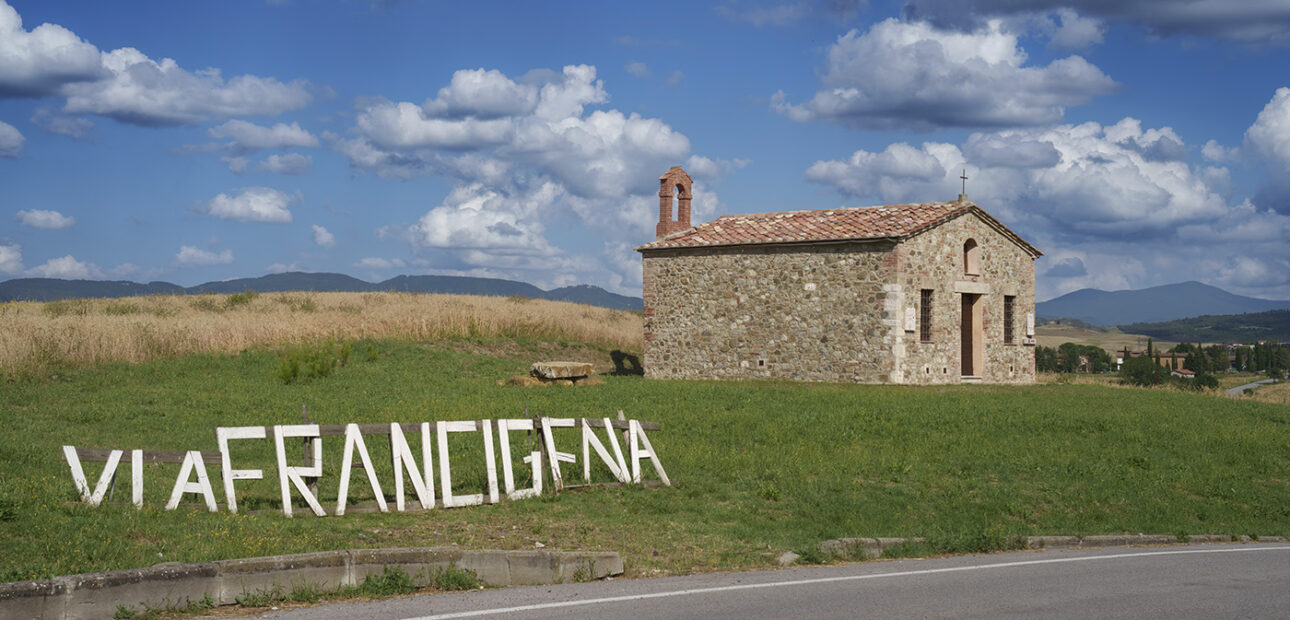
A journey between Canterbury and Rome became known as the Via Francigena, a historic pilgrimage road across four European countries. The route is connected with a journey made in 990 by Sigeric, Archbishop of Canterbury. His written record makes its old stopping places known. Today this long itinerary also represents the shared cultural history of different European regions.
The Via Francigena in Medieval History
The name Via Francigena was already used in 876. Later, in 990, Sigeric travelled from Canterbury to Rome to meet Pope John XV and receive the pallium connected with his position as archbishop. This journey became especially important because he recorded its stages in a short diary.
There were 79 stages noted in that record. They gave later generations a way to retrace the main places along the journey. Unlike a story with only a beginning and an ending, the diary preserved many points between them. This makes the journey possible to understand as a connected road through several lands.
Sigeric and the Recorded Stages
The diary is not a long description of every place. It is valuable for the sequence of stops. Together, those stops show how a medieval traveller moved towards Rome. The historical line between Canterbury and Rome is a central part of the identity of the route today.
Countries Along the Via Francigena
The full itinerary is described as about 1800 kilometers. It links four countries, each belonging to the wider European pilgrimage tradition:
- United Kingdom: Canterbury is the recorded starting point of Sigeric’s journey
- France: the route continues across this country towards the south
- Switzerland: another section of the journey lies here
- Italy: Rome forms the destination of the recorded pilgrimage
The path also belongs to a larger history of movement. Pilgrims travelling towards Rome could continue towards Jerusalem, while other pilgrimage roads led towards Santiago de Compostela. These different journeys connected distant European places long before modern transport.
European Cultural Meaning and Preservation
The Via Francigena joined the Council of Europe Cultural Routes program in 1994. Its place in this program reflects a history shared between countries, without taking away their separate identities. The old road is one connection, yet each region has its own history within it.
On 22 April 2001, the European Association of Vie Francigene was founded. It brings different local authorities and European institutions into cooperation around the route. Their work connects the preservation of a thousand–year–old pilgrimage tradition with cultural activity and local development.
Sustainability is part of this approach. The route is not understood only as kilometers between two cities. Its towns, historical memory, and cooperation across borders give the Via Francigena its wider meaning.